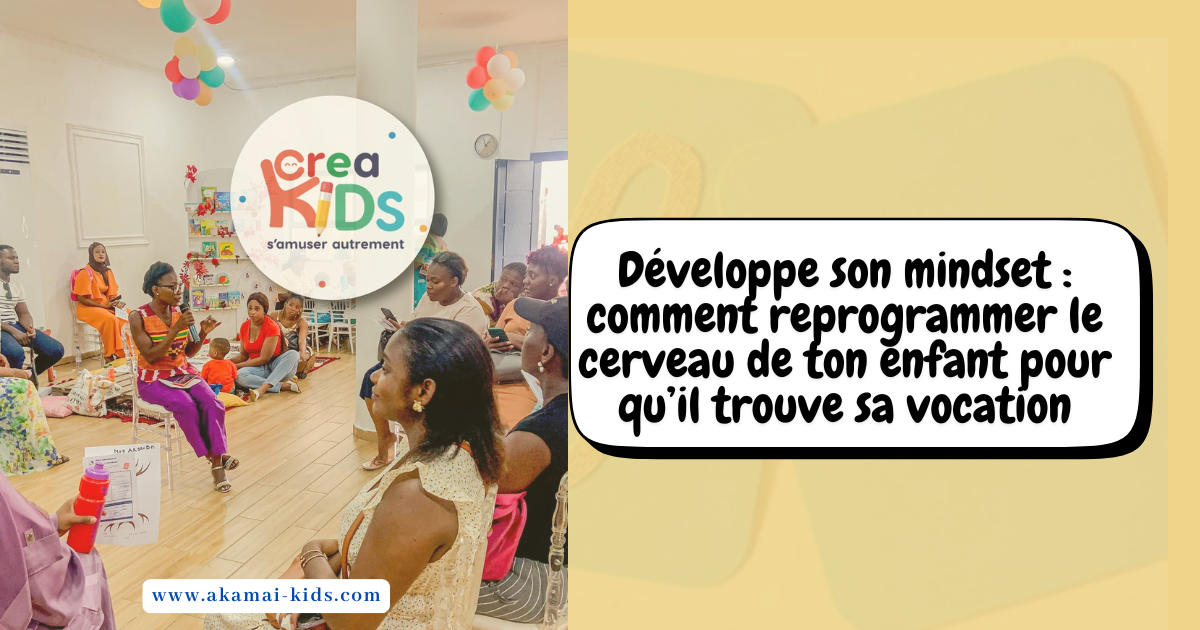
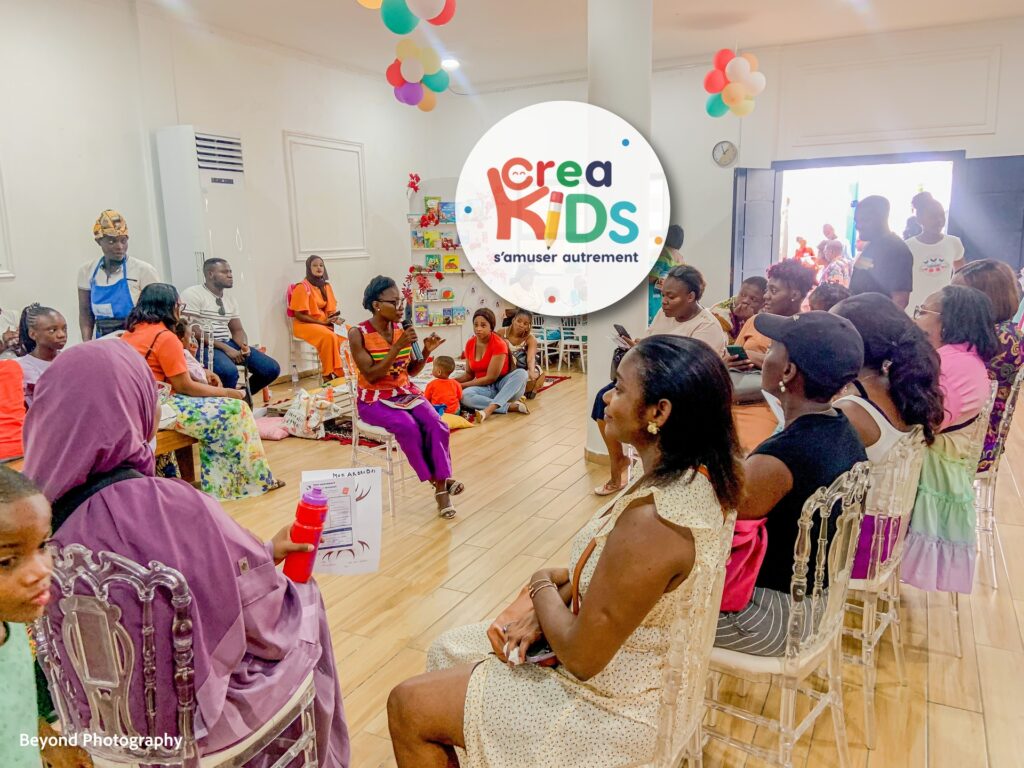
A week ago, at Crea Kids Fair, I met parents who had come with the same question, sometimes spoken aloud, sometimes kept to themselves: ‘How can I help my child find their way in a world changing so quickly?’
That day, we did not talk about careers. We did not talk about academic performance.
We talked about the brain, about mindset, and above all about what we plant in our children's minds very early on. Because long before knowing what they will do later in life, children learn something fundamental: what they believe is possible for them.
Mindset is not a concept reserved for adults or entrepreneurs. It develops from early childhood through education, experiences, repeated words and the way we see our children.
This article invites us to understand how, as parents or educators, we can help children develop a mindset that will one day allow them to recognise their talents and dare to follow their calling.
Before talking about a calling, talents or the future, we must return to the foundations.
We cannot guide children towards what they may become without understanding how their way of thinking develops.
What is mindset in children?
How does it develop in the earliest years of life?
And above all, what role do parents and educators play in this often invisible but decisive process?
A child's mindset is how they perceive:
From early childhood, children develop internal beliefs that gradually become personal truths : ‘I am capable’, ‘I never manage it’, ‘I can learn’, ‘This is not for me’.
These beliefs do not arise by chance. They develop through experiences, adults' reactions, repeated words and the emotional climate in which children grow.
Children are not born confident or constrained. They learn to become so.

A child's brain is extremely adaptable.
Neuroscience describes neuroplasticity : the brain's ability to change in response to its environment and experiences.
Every encouragement, criticism and opportunity offered or withdrawn strengthens certain neural connections.
In other words, adults' words and attitudes literally shape children's brains.
When children regularly hear: ‘You can try’ ; ‘You are making progress’ ; ‘It is OK to make mistakes’, their brains learn to associate learning with safety and curiosity.
Conversely, repeated messages such as: ‘You are not good at this’ ; ‘You are too slow’ ; ‘You always make mistakes’, can create a lasting mindset of inhibition and fear of failure.
A calling is not revealed through constraint. It emerges in a climate of inner freedom. Children with an open mindset dare to:
Conversely, children who grow up fearing mistakes or disappointing others learn to conform rather than discover themselves.
Before asking ‘What will my child do later in life?’, it is essential to ask: ‘Do they dare to be themselves today?’
Montessori education is based on a deeply respectful view of children:
children are capable, competent and developing.
In a Montessori environment:
This approach develops a growth mindset, where mistakes become a normal stage of learning.
Children do not seek to be the best. They seek to become better than yesterday. This inner attitude prepares the ground for finding their calling.
Language is one of our most powerful educational tools. Changing a few words can profoundly transform a child's mindset.
For example:
These seemingly simple adjustments send a fundamental message: ‘You are allowed to grow.’
Children praised only for results learn to avoid challenges.
Children encouraged for their efforts learn to persevere.
Saying:
reinforces a brain oriented towards learning and discovery.
A calling cannot be forced. It emerges through time, observation and experience. Observing your child means asking:
Offering varied experiences without pressure or projecting expectations helps children refine their self-knowledge. Through this range of exploration, talents emerge gently and naturally.
In many African cultures, children learn by observing, imitating and participating in community life. They are included, given responsibility and recognised within the group. This active role nurtures:
Combined with Montessori and neuroscience, these values provide a balanced, rooted and meaningful educational framework.

Helping your child find their calling does not mean choosing for them.
It means creating a safe environment where they can:
The parent then becomes a caring guide, an emotional support and attentive observer—not someone who programmes a destiny.
Developing your child's mindset does not mean promising a predetermined path to success. It means giving them a strong inner foundation to dare to explore, try and discover themselves. A calling is not an instruction. It is where who children are, what they love and what they believe possible meet. We prepare for that meeting today through our words, the experiences we allow and the trust we choose to place in them.






Louis
4 January 2026Thank you for exploring this topic.
Admin
13 March 2026You are welcome. The aim is to inform and support parents.