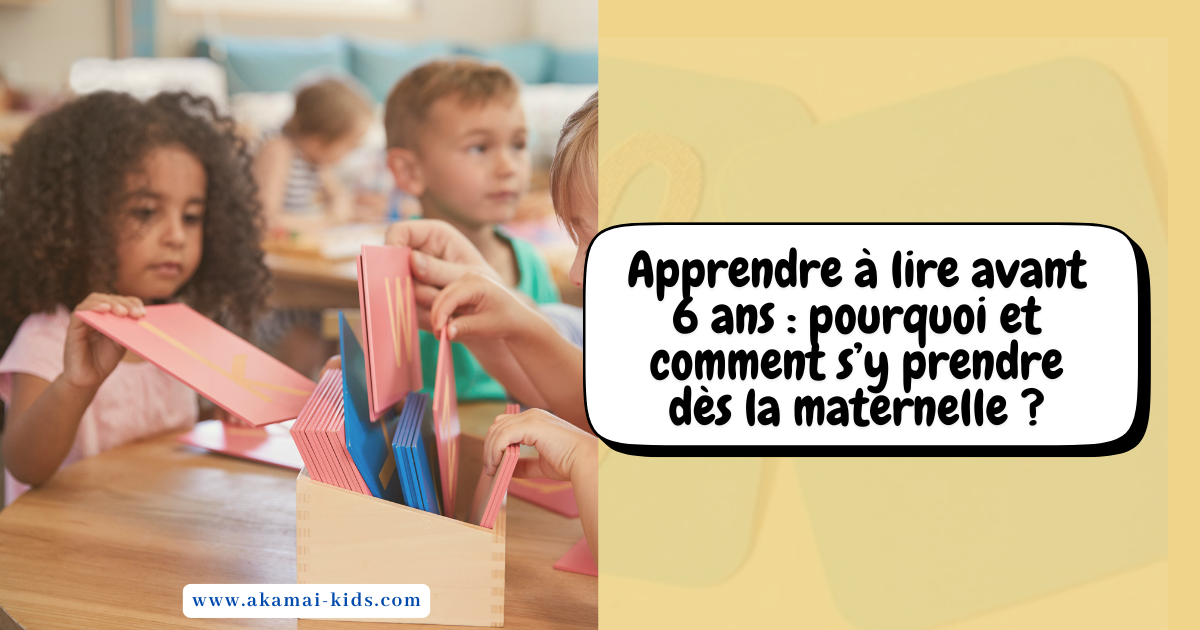
Learning to read is not a race against time; it is an adventure to begin with children in preschool. Today, a growing body of research in neuroscience and in Montessori education shows that children aged 3 to 6 are in an extraordinary period of absorption: discovering language, observing letters, recognising sounds and seeking to understand the world of words.
So why wait? Gently introducing reading before age 6 gives children tools to learn with pleasure and confidence. In this article, we explore why it is a wonderful idea and, above all, how to approach it practically at home or in preschool.

Between ages 3 and 6, children's brains experience an explosion of neural connections. Neuroscientists call this the sensitive period for language.
At this age, children absorb sounds, words and symbols with remarkable ease. It is the ideal time to associate reading with pleasure, before schooling turns it into an obligation.
Children who discover reading early develop a positive relationship with learning. They feel capable, curious and proud to understand words independently.
Many studies show that this early start supports motivation, concentration andindependence at school.
In other words, reading early means getting a little ahead in the world—and above all, growing within yourself.

In Montessori education, we do not ‘make children read’: we support their natural desire to understand.
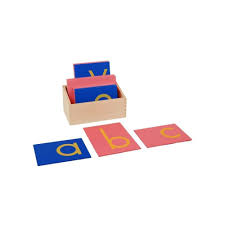
Through a prepared environment—sandpaper letters, movable alphabets and sensory games—children handle, listen, touch and experience reading.
It is a living experience, not a lesson.
Even before reading, children feel letters: they trace, listen and connect a sound to a symbol.
This multisensory process creates a lasting memory. Children remember not simply because they are told, but because they experience it.
The result: they begin reading with pleasure, without pressure or fear of failure.
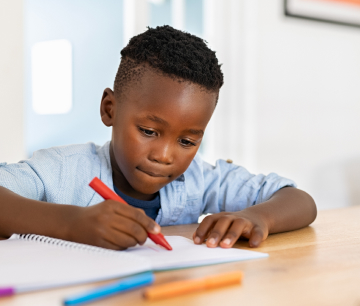
Learning to read early helps children connect sounds (phonemes) and letters (graphemes).
They become more attentive to words, rhymes and syllables, also improving their spoken expression.
Children who can read discover independently: they explore books, signs and stories. They take an active role in learning, nurturing their natural curiosity.
Shared reading moments strengthen the parent-child connection.
They are not just learning experiences, but moments of tenderness, listening and shared pride.
Use:
Children do not all develop at the same pace.
The important thing is not to ‘force’ reading, but to observe the signs: when children show interest in the letters of their name or the sounds in words, it is time to begin!
In positive education, we offer without imposing.
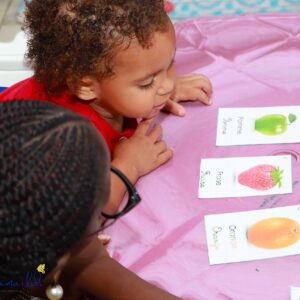
Parenting does not mean ‘teaching’ like a schoolteacher. It means guiding, encouraging and valuing.
Children sense our emotions: if reading becomes a joyful time, they willingly engage.
With a gentle, patient and confident approach, we nurture conscious, joyful parenting, where every step forward is celebrated.
Learning to read before age 6 is not about skipping stages; it is about honouring children's natural potential.
Neuroscience, Montessori and our experience show this: children love learning when they feel free, curious and supported. As a parent, you have the power to create an environment where reading brings happiness, pride and confidence.
If you would like a clear framework to begin, discover the reading programme Step by step towards reading with Montessori





Miraim
16 December 2025Thank you for this article. I will start with my son, who is in the middle year of preschool.
Miss Jaden
16 December 2025Offering without imposing is complicated with our children in Africa. You feel you have to shout to get a child to do something. For me, positive parenting is a real challenge.
Laura
23 December 2025Today we see more and more reading methods. As a child I used the syllabic method, and I admit it worked for me. The other methods seem complex to me.